You Know Youre Winning an Arguement When People Change the Subject

How to debate and brand progress by curbing Intellectual Dishonesty
Discourse and debate are more constructive in both democracy and business when we acquire to exist honest with ourselves and adjourn the subtle behaviors that arrive the way of trading real ideas.
SCROLL Down
How to debate and make progress by curbing Intellectual Dishonesty
Discourse and debate are more constructive in both democracy and concern when we learn to be honest with ourselves and curb the subtle behaviors that get in the way of trading existent ideas.
Disagreement doesn't have to exist so awful.
Our different viewpoints tin can brand our families and communities and companies meliorate. In my book Dream Teams, I debate that the all-time kind of collaboration requires:
A) People who remember differently (aka "cognitive diversity")
B) to put their heads together (creating "cognitive friction"),
C) and be willing to alter (using "intellectual humility").
This is the formula that explains how the most exceptional people exercise the impossible. Innovative companies apply information technology to change the world. Unstoppable athletes alter the game with it. Groundbreaking social movements require information technology. And in theory, a democracy is a great political system for making progress this mode, too.
A grouping where anybody is equal and able to speak freely ought to be able to tap its cerebral multifariousness and make continuous progress on hard bug together—generating cognitive friction via:
-
Discourse (exchanging ideas); and
-
Debate (arguing the merits of those ideas).
But almost of the time things don't work out and so smoothly.
Battles of different viewpoints can exist painful. They often get personal. And very often, conversations about ideas devolve into battles of whose grouping is better than the other.
And so instead of epiphanies born from different viewpoints, nosotros get regime shut downs. Instead of civil discourse in our companies and relationships, we get backroom maneuvering—or all out war.
only information technology'due south not because having different ideas is bad. it'due south because too frequently give-and-take of our different ideas falls victim to A THING Chosen intellectual dishonesty.
The post-obit mega-post is a thorough exploration of all the ways it's possible to be intellectually dishonest, how to recognize it in yourself and others, and how to stop it.
Since politicians and cable news pundits employ intellectual dishonesty very visibly in debates—we're going to explore this topic through the lens of political argue. But one time you see how it works, and just how hands we can autumn for it ourselves, I call up you'll be better equipped to deal with information technology in your own life.
Curlicue down to get started, but first…
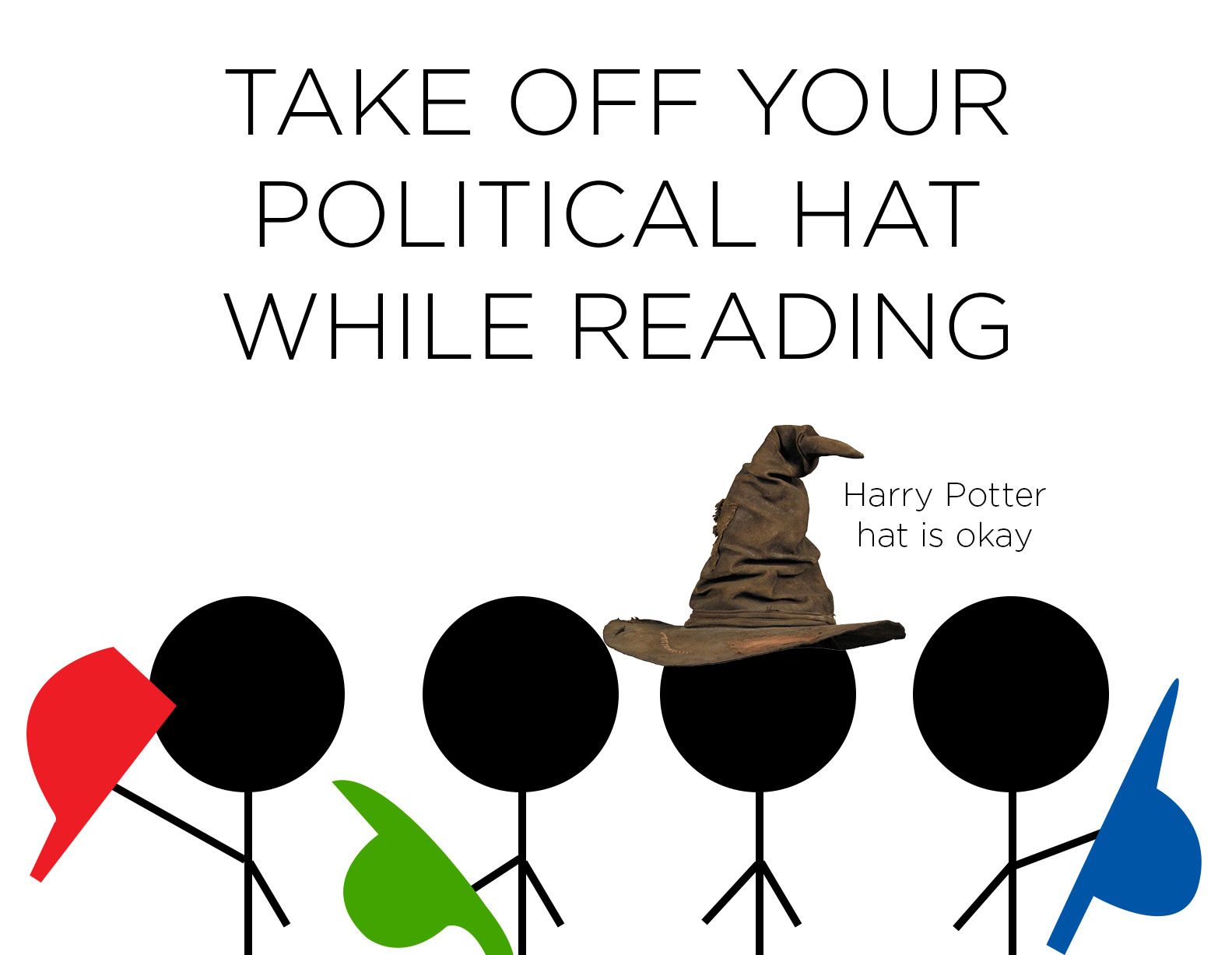
By manner of disclaimer, I consider myself a political Contained. I'm going to utilise a lot of examples in this mail service of Republican and Democratic politicians and pundits. I'll also use a lot of examples of President Trump because he'due south a highly visible, relevant example right at present. As you read, I'd ask that you have off your "political identity chapeau" and focus on the behaviors being discussed more the people (and parties they belong to) who I present as examples of these behaviors.

What Is Intellectual Dishonesty?
And why it merits a "difficult stare"
What Is Intellectual Dishonesty?
And why it merits a "difficult stare"
Intellectual Honesty is about having high standards for the truth.
It's not just most not lying; it'south about stating the truth when yous know it, hiding nothing, twisting nothing, leaving nothing out.
Intellectual dishonesty, on the other manus, is a sort of blanket term for existence dishonest without necessarily straight out lying. It'due south the failure to utilise high standards for truth.

Intellectual dishonesty is usually self-serving. Often it'due south deliberate. But it's possible to be intellectually quack without realizing information technology, due east.k. when you're lying to yourself.
Intellectual dishonesty often hinges on technicality. It'southward when you haven't exactly, technically said a bald-faced lie… but what you lot're proverb isn't actually above board.
Basically, if yous couldn't await Jesus, Buddha, Muhammad, and the Virgin Mary all in the eyes when yous say it, you're probably not being completely intellectually honest.
Intellectual dishonesty is the enemy of intellectual humility. As Perry Tam puts it in Entrepreneur magazine, intellectual honesty "means always seeking the truth regardless of whether or not it agrees with your own personal beliefs." Information technology'due south not fudging, for any reason.
All that said, information technology's possible to be intellectually dishonest without realizing information technology. Especially in the case of fallacies. So it's of import to recall that merely because someone's said something intellectually dishonest, they aren't necessarily being nefarious.
In full general, I think the correct thing to practise is to start from a place of giving people do good of the doubt when we spot intellectual dishonesty. Merely even if someone is doing it on purpose, we should strive to be equally kind as possible—at least until we give them the chance to do meliorate. (Jesus, Buddha, Muhammad, and Virgin Mary would all probably be kind to you, also, later y'all screwed up.)
Why is all this important? Considering we can't truly make progress through fence and discourse if nosotros're non all behaving with high standards of honesty.
How intellectual dishonesty derails discourse and debate
Behaviors and habits that distract, divide, or impede progress
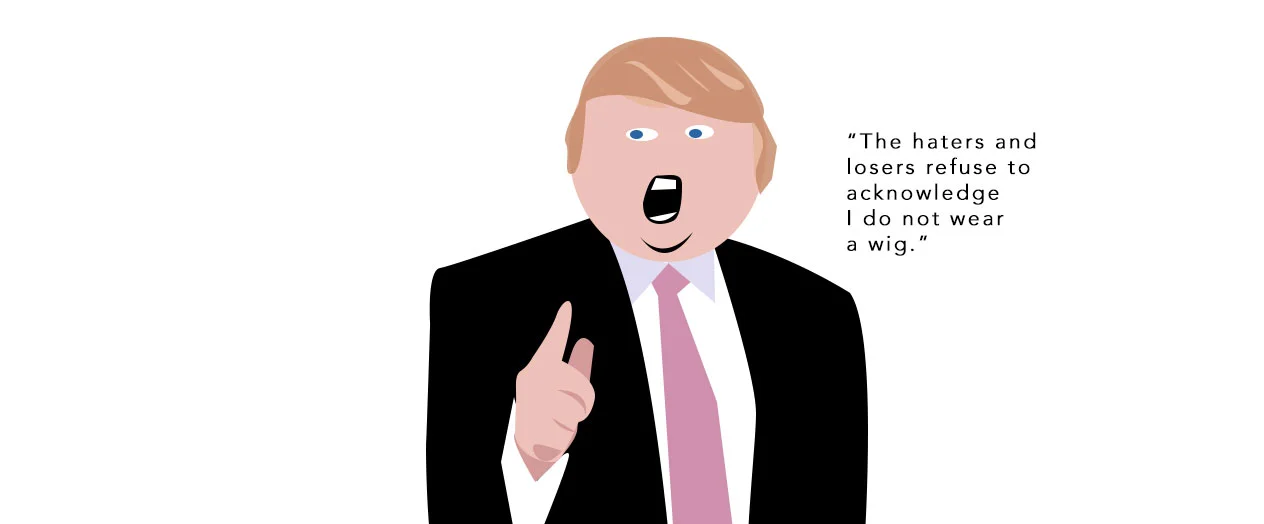
(P.Due south. The hair is real. But also that is a existent quote.)
How intellectual dishonesty derails discourse and debate
Behaviors and habits that distract, divide, or impede progress
(P.S. The hair is real. But also that is a real quote.)
AT THE TIME OF this writing, the 2020 master debates are a few months abroad, and already Democrats are freaking out about them.
Political debates are frustrating enough without ten people trying to get a discussion in. But in an era where the goal of a televised debate appearance is to look as good as possible, those overstuffed primary debates—and the one-on-i debates they'll eventually lead to with President Donald Trump—are sure to exist a shitshow from an intellectual standpoint equally well.
That is, if the state of political arguments on TV and Facebook are any indicator.
Since before fifty-fifty the Ancient Greeks, humans have used debate as a tool for unlocking the ability of our unlike viewpoints. A battle of ideas tin allow a group to come across further, but most of the time "fence" around political policy problems doesn't work out that way.
That's because the style we both set and moderate political debates not only leave the door wide open up for intellectual dishonesty, just actually encourage information technology.
There are 2 chief reasons:
-
FIRST, rather than an exchange of ideas—which in a primary debate would be an especially skilful thing—debates are seen as a competition where a person "wins." The existent goal of the debaters, then, is looking as good every bit possible to whoever's watching. And that ways information technology doesn't affair whether you answer questions honestly—or at all—as long every bit you announced better than the "other guy" past the time the clock runs out.
-
SECOND, nigh public debates put the identity of the debater and the group they correspond on the line—rather than the quality of the ideas beingness discussed. This leads to a win-for-our-side-at-all-costs strategy. Information technology encourages people to ignore valid arguments that get against their viewpoint. And information technology makes information technology easy to justify or ignore their own intellectual dishonesty in guild to win.
This all incentivizes bad behavior and disincentivizes the exploration of new intellectual territory. Or God(s) preclude, admitting y'all've ever been wrong about annihilation.
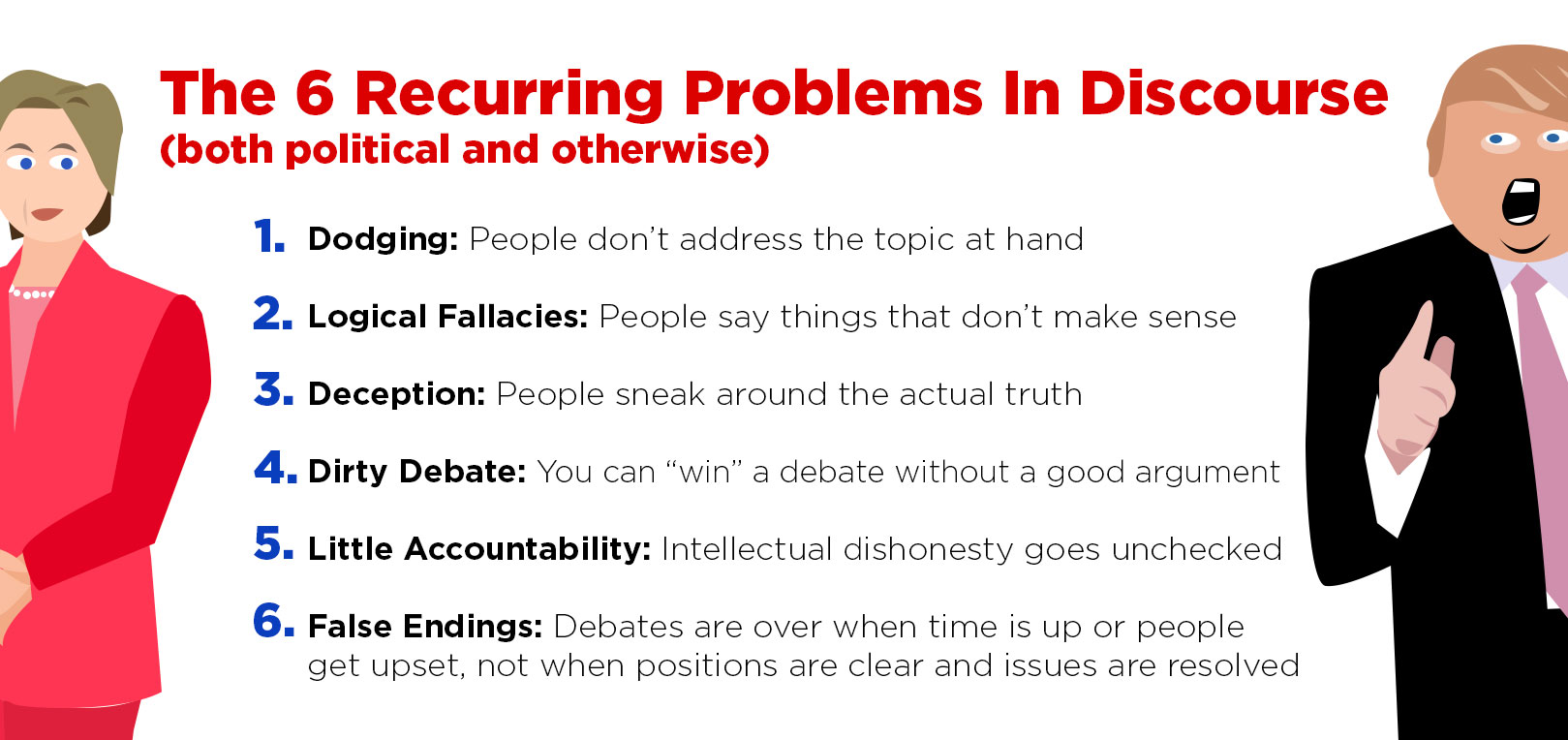
Thus, most debates are rife with the four types of intellectual dishonesty. And two things make them worse: debate moderators who don't hold people accountable, and the fact that most live debates have a clock:
Troublingly, PR grooming for Goggle box—especially for political shows—often actually teaches tactics to take advantage of this. When I myself took "media training" for my outset television set appearances, I was taught how to deflect, distract, and pivot to whatever it was I was prepared to talk almost, all while making sure that the audition doesn't realize that'due south what you're doing.
Comedian Jon Stewart maybe summed upwardly the problem all-time in his famous TV segment on CNN'south contend testify Crossfire when he said to left-wing debater Paul Begala and his right-wing co-host Tucker Carlson:
"Stop pain America… What you practice is not honest."
Further complicating the debate debacle is the tendency for debaters, when they have come off desperately in a debate, to attack the moderators of debates as biased, unfair, etc.
Sometimes this can actually be the example—especially when at that place aren't clear rules to assistance the moderator be more than like a referee. But either way, this leads to moderators property back on policing bad beliefs, for fear of looking bad themselves—and thereby losing ratings and brownie.
All this makes so many debates a waste of time, and in some ways actively divisive to guild.
But information technology doesn't take to be that manner.
Though I've argued that the merely good kind of debate is one where the goal is to make progress rather than win, reality is that debates between political candidates are about picking the best person for the job, which ways that each debater does have a huge incentive to "win." (I'd contend that we ought to judge political debaters past their power to exist honest and open minded, not their ability to be right about everything—since the job of a public official is not to be an expert on everything, but to use good judgment on behalf of the people they represent, in light of always irresolute data.)
So for now, we'll go through each of these 6 problems in order. We'll showtime by looking at the four types of intellectual dishonesty in detail, then discuss how to curb them, and and then propose some new rules that can help us set up debates in a ameliorate fashion.
The Art Of The Dodge
Intellectual Dishonest Move #1: Not Answering, While Pretending You Are
The Art Of The Dodge
Intellectual Dishonest Move #1: Not Answering, While Pretending You Are
ONE OF THE MOST common ways to be intellectually dishonest in a contend is to dodge questions while pretending you're answering them. Yous're not telling a lie, only you're being dishonest when y'all manipulate the word this way.
Like Street Fighter Ii characters, politicians and Boob tube pundits have several methods for avoiding questions they don't want to answer.
I took some liberties in naming these methods after famous political debaters who've used them a lot on photographic camera.
(Note that this is not an Ad Hominem fallacy, which we'll become over in the next department. I'm not trying to ignominy an argument, only to illustrate the types of dodges—which each of these people famously apply.)
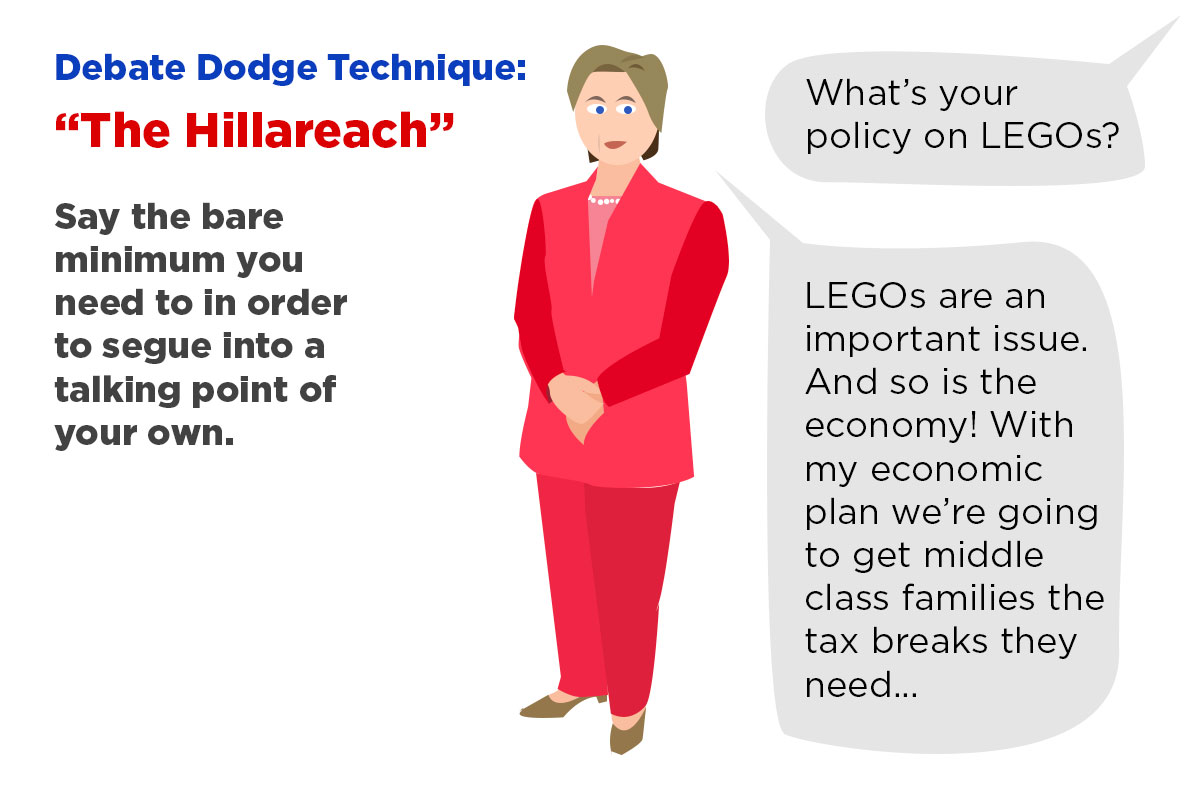
The first type of dodge is when you lot quickly say whatsoever yous need to in order to reach a talking signal of your own. This is the archetype politician'south motility. It'southward literally what I was taught in the beginning v minutes of PR training when I commencement started getting asked to go along cable TV news shows.
In the post-obit clip during the 2016 Presidential debates, Hillary Clinton is asked if she'd broken a previous promise near the Clinton Foundation non doing "pay to play," and instead of directly answering that question, she talks about the work she did as Secretarial assistant of State and the work the Clinton Foundation does:
She's non lying per se. But she completely avoids answering the question, while making herself look pretty good in the process.
Next nosotros come to The Hannittack (non to be confused with, but certain to give you the hazard of, a heart attack):
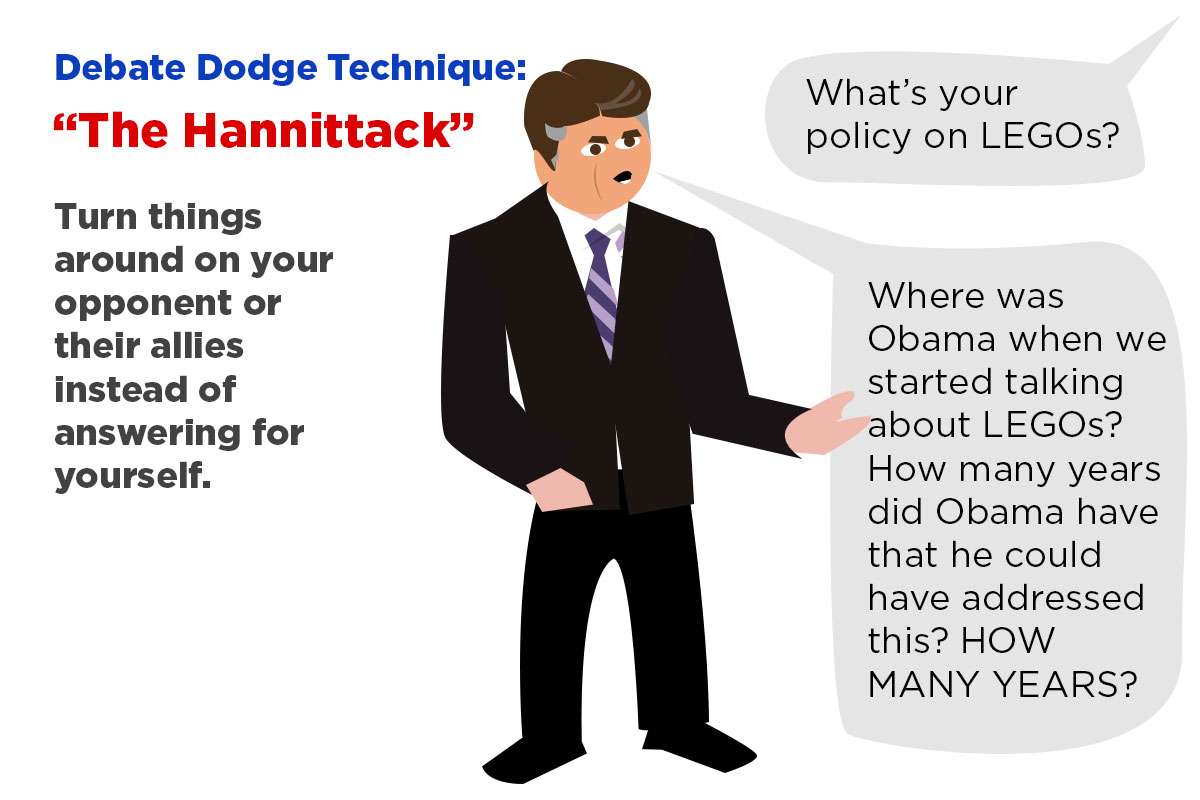
A very common dodge is to take the question and plow information technology effectually on your opponent or their allies instead of answering it.
This can be accomplished by bringing up an apparent hypocrisy related to the topic, pointing out that an ally of whoever yous're debating did something bad one time, asking your debate opponent an aggressive question, or pointing out an alleged error (existent or perceived, big or tiny) in something they said. The indicate is, you lot're doing this instead of answering the question.
This puts the other person on the defensive, and gets y'all off the hook. Even better: don't permit them terminate asking the question before you jump in with your attack. Repeat the same attack once again and again if necessary.
I of the most painful examples of this in contempo memory is the below commutation between Fox News'south Tucker Carlson and Newsweek'due south Kurt Eichenwald. As we'll discuss later in this post, Carlson is a ninja master of muddy debate tactics, but if there'southward one thing I respect him for, it's his tenacity when it comes to question dodgers. In this clip I actually start to feel bad for Carlson every bit over and once again his guest (Eichenwald) insists that he wants to answer Carlson's question and so proceeds to dodge information technology by attacking Carlson.
Leap to around 4:45 in the following clip for one of the more than frustrating parts of the exchange:
Information technology'south particularly bewildering, because Eichenwald is arguing that Carlson won't permit him answer… while not always answering.
Adjacent we have The Conword:
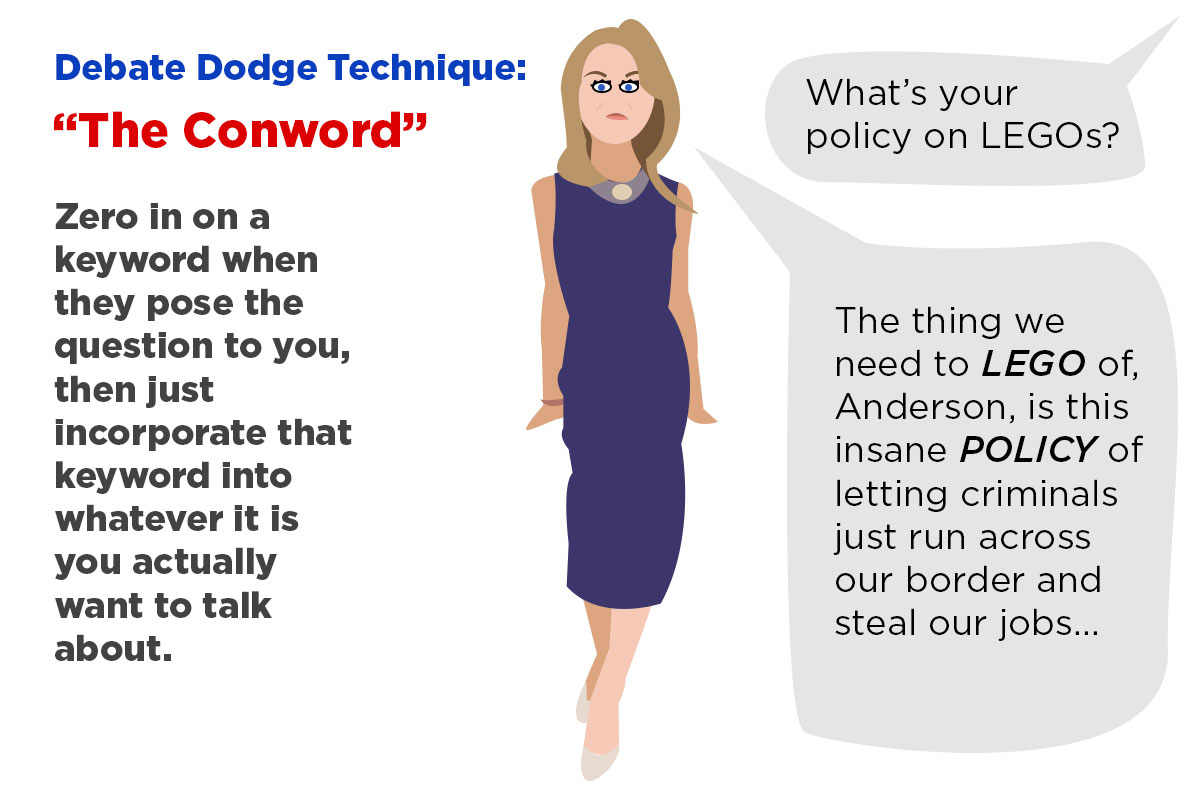
One of the most clever ways to contrivance is to zero in on a keyword in the question you lot're posed, then go into a talking point of your own that incorporates that keyword.
This makes it announced that you lot're answering the question, but you're getting away with non answering it at all.
Fifty-fifty better: utilize your talking indicate to put the other person on defense.
This splendid explainer video by Carlos Maza breaks downward publicity whiz Kellyanne Conway's signature usage of this dodge tactic:
Next we accept The Colbert Antiphon:
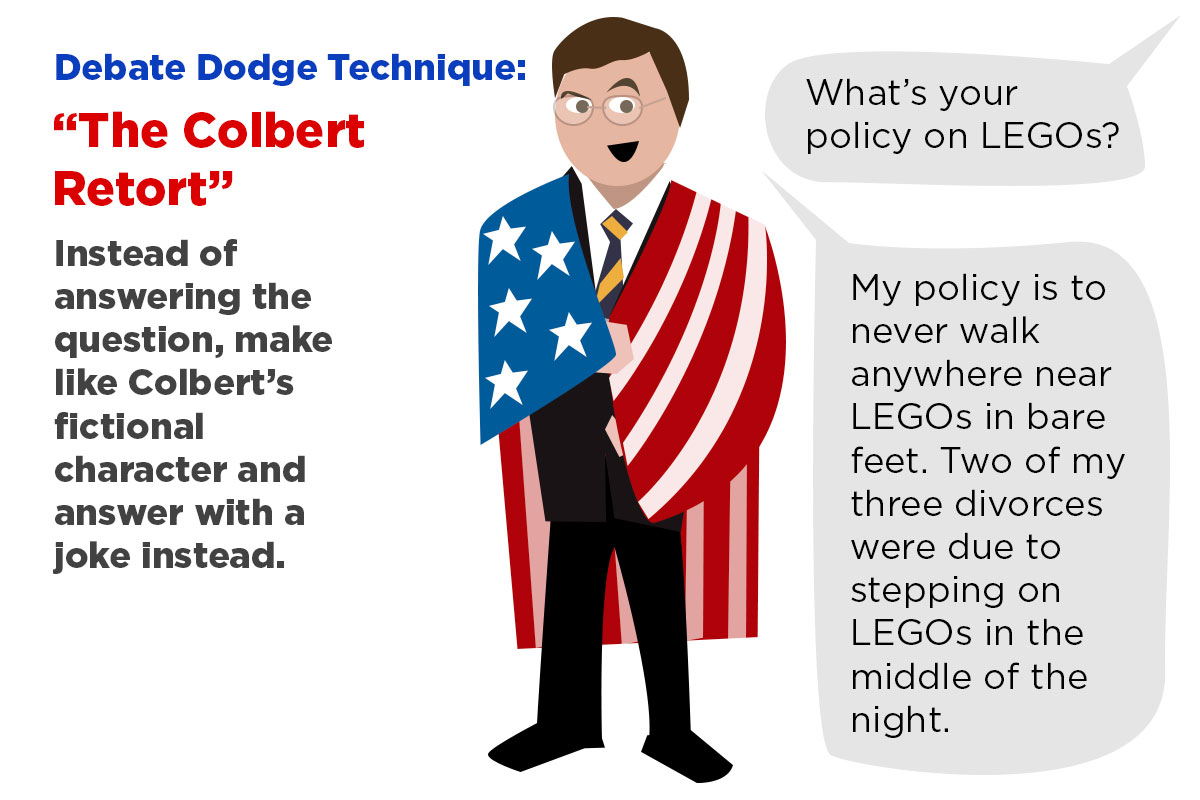
Stephen Colbert's faux persona in his long-running satirical news prove The Colbert Written report was a purposely infuriating debater. His signature movement was cracking a joke instead of answering his "opponent'southward" question.
This, which I call "The Colbert Retort," tin can be an incredible crowd-pleaser. And it'due south fine if you are running a comedy prove and not an actual, existent-earth-consequences argue.
Only if your goal is intellectual honesty, you shouldn't practice this unless you programme on besides answering the question.
Donald Trump gets two dodges named later on him, since he's i of the most prolific dodgers on Tv set today. (He's likewise shown on TV more than than anyone, so he gets the chance to practise information technology a lot more than other people who might be inclined to dodge the shit out of questions, too.)
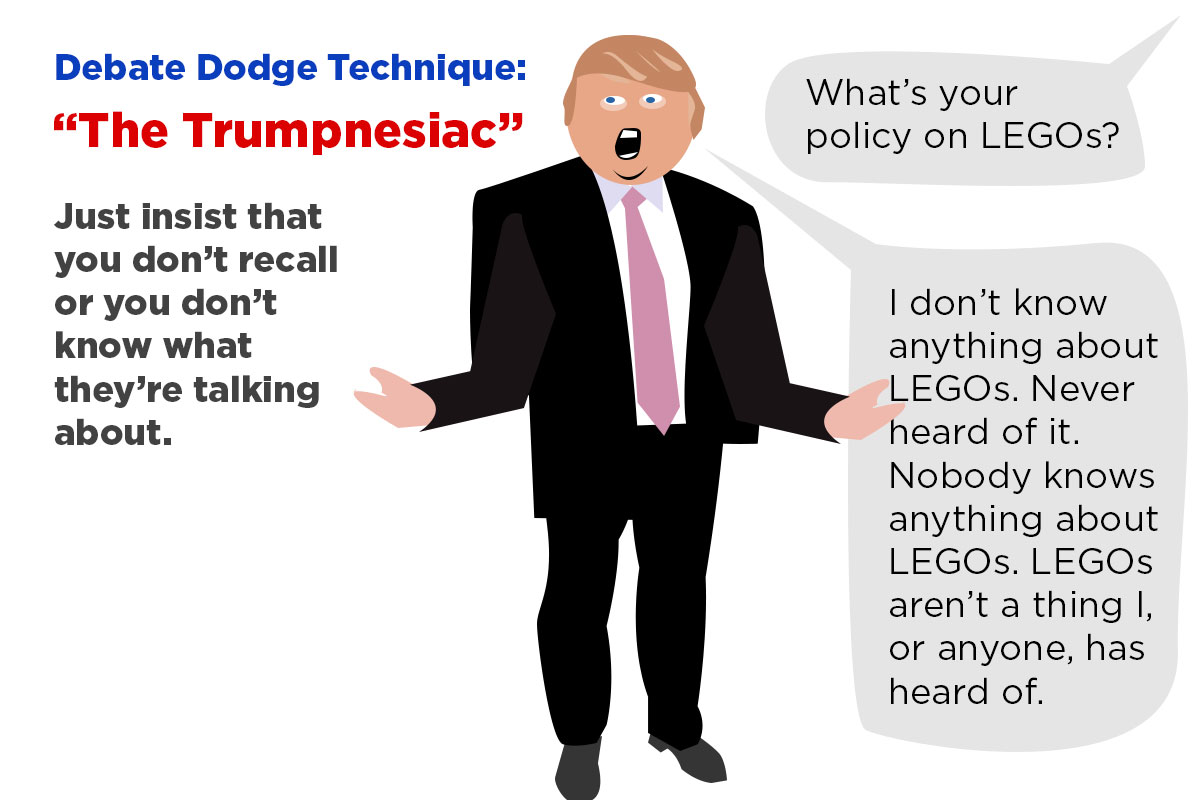
The outset is "The Trump-nesiac." This is where you just insist that you don't know what they're talking about. It'south not dishonest if you actually don't know about the thing you've just been asked. But it's a dodge—and an outright prevarication—when you claim amnesia after you've already talked or tweeted about the very thing you just said you never heard of.
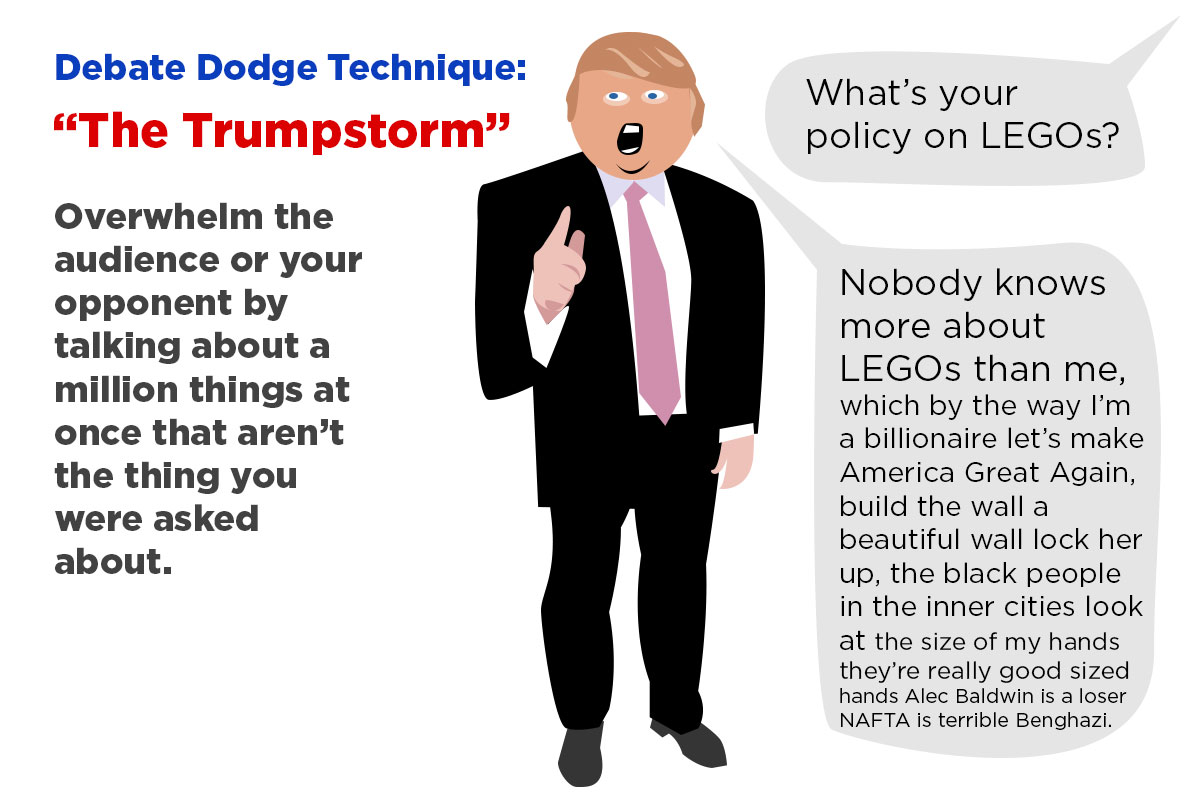
Trump Dodge #2 is "The Trumpstorm." This is where y'all overwhelm the audience or your opponent past talking virtually a dozen things at once. It's similar a DDOS attack on the data processing center of your brain.
Hopefully by the terminate of the storm the audience forgot what you were supposed to answer—or got distracted past all the shit you lot just said.
Funny side note: someone on LinkedIn already misconstrued this as an advertizement hominem fallacy. Information technology's but an ad hominem fallacy if it'south used to attack an unrelated statement. In this case, we're talking about something someone irrefutably does, on camera, all the fourth dimension. It'due south like saying calling fried chicken "greasy" is an advert hominem.

Too, as we'll discuss in the next section, using the fact that someone used a fallacy to discredit their position or statement is itself a fallacy (called The Fallacy Fallacy), then fifty-fifty if this guy insists that the name Trumpstorm is an ad hominem fallacy, that itself doesn't invalidate the point—which is that overwhelming people with information without answering the question is a dodge.
*
There is only one intellectually honest manner to dodge a question. And that's to actually say that you don't want to respond the question, or y'all don't think the question is worth answering.
In this prune where he's asked about alien life, candidate Obama addresses a question he doesn't care near in an intellectually honest way by albeit he doesn't know the answer:
(As an aside, a reader brought this up: In his September 2018 Senate testimony, Supreme Court Justice nominee Brett Kavanaugh dodged a whole bunch of questions. Here's an infographic of every time he did . Many of the dodges were not dishonest; he simply said he doesn't want to answer. But people gave him grief for this, because a Supreme Court Justice should have had an answer to many of these. He did, however, likewise use some intellectually dishonest dodges, primarily when ducking questions about whether he was in favor of FBI investigations of attack allegations against him.)
To give Mr. Trump a bit of credit besides, in this interview with Stephen Colbert (the non-in-character Colbert), the then-presidential candidate dodged a question the honest mode by just saying he didn't want to answer it:
Satisfying? No. Just information technology'due south not quack to say yous don't want to answer.
It's important to distinguish this sort of affair if nosotros're trying to be intellectually honest. Just because yous don't like someone or their point of view doesn't mean that it's okay to non distinguish when they're existence straightforward or honest—and when they're non.
Political soapbox oft devolves into accusations that everything someone says is incorrect or bad, and that doesn't get united states closer to progress either.
Speaking of things that don't become us closer to progress, the side by side blazon of intellectual dishonesty we'll discuss is especially troublesome…

The Hitchhiker's Guide To The Fallacy
Intellectually Quack Fence Move #two: Saying Things That Don't Make Sense, But Pretending They Do
The Hitchhiker's Guide To The Fallacy
Intellectually Dishonest Debate Move #2: Saying Things That Don't Brand Sense, Only Pretending They Practise
IS Human being INHERENTLY Skilful or bad?
Before nosotros get back to more existent political debates, I'd like to introduce the idea of the least obvious blazon of intellectual dishonesty—logical fallacies—through a neutral case: a debate on the fictional NBC TV prove Customs.
In the ninth episode of Community, two teams debate the result of homo's inherent goodness in hilarious manner in a school gymnasium. In the process, they show us some terrific examples of using logical fallacies that don't prove you lot're right, but may brand the audience think you lot've done just that.
A logical fallacy is basically just logic that doesn't brand sense when y'all scrutinize information technology. Fallacies are intellectually quack because they have something that doesn't make sense and pretend it makes sense.
It'south common to be unaware you're using a logical fallacy. So you can utilize this kind of intellectual dishonesty without beingness a "liar" per se. For that reason, I think we should exist gentle to people who do this inadvertently.
Information technology's especially shitty to use a fallacy if y'all know better—which I'd contend that anyone running for public office ought to. But in either case, fallacies make it the way of progress, so it'due south important to be able to place them.
OK. Let's take a look at some fallacies in action, via Customs:
In this clip, a debater played past Aaron Himelstein quotes a German language poet named Franz Wickmeyer, who says that snowfall falling to earth is pure, and it's the World that makes it muddied. Therefore, Himelstein says, man is also pure initially, before the Earth corrupts him.
Though he gives a marvelous performance, underneath it the debater has employed several intellectually quack tactics, including three fallacies:
-
An appeal to authority/expertise. Just because a wise person said it, doesn't mean it's truthful.
-
A false analogy. People and snow are very different, and they come to Earth in very different ways. It's intellectually dishonest to compare them in an argument well-nigh good and evil. (Merely considering snowfall and men both melt at a high plenty temperature doesn't hateful that "human is melty.")
-
An appeal to emotion. Just considering Himelstein cries when he makes his point doesn't mean his point is truthful, or more true than if he hadn't gotten emotional.
In addition to these fallacies, the debater as well traffics in deception (nosotros'll become to all the tactics for deception soon). Franz Wickmeyer is not a existent person, then the quote is moot anyway. Of course, nosotros could assume that in the fictional world of Community Wickmeyer is real, but it'southward worth pointing this out here considering of how often quotes get twisted and go un-fact-checked in the estrus of a real-life debate.
Further, part of the gag in this episode is that the opposing team is upset that they are debating a human in a wheelchair. The wheelchair man (Himelstein) purposely uses his disability equally a way to get sympathy from the judges. This tactic, called "entreatment to sympathy," is beguiling if it's used to endeavour to sway the audition, considering feeling sympathetic for the guy doesn't mean he's liable to be more right than his opponent.
Now here's his fence opponent's rebuttal:
The grapheme played by Joel McHale counters by summarizing a research experiment, The Stanford Prison Experiment, where "21 out of 21 students abused their fellow students." This ane is a more than clever fence move, just it's also riddled with logical fallacies:
-
Chestnut / argument from small-scale numbers. This is another way of maxim that just because i time a affair happened, it doesn't hateful it ever happens. Science must exist repeatable to be taken as law—which the Stanford Prison Experiment was non. This argument is also a…
-
Not sequitur. But because 21 students abused their fellow students doesn't mean that "Man is bad." This is a logical leap that's missing some steps for information technology to brand sense.
Further, McHale makes a factual error. The Stanford Prison Experiment has been soundly discredited by other scientists equally a fraud. McHale may have been unaware of this, which would make this a error rather than an overt deception. Just a fact check would reveal that this is not a valid statement.
But McHale delivers the existent whopper next:
He one-ups his opponent's quotation with a quote from Jesus. This is intellectually quack because:
-
Information technology'south yet an appeal to authority. He's just maxim that his say-so is a better say-so. (This debate is a secular debate, and so there's no agreement/assumption here that everything Jesus said was accented truth. If this were in a Church where everybody believed in Jesus'southward every give-and-take as truth, that might be a different story.)
-
It's an statement from "age." He implies that his quote is better because it's more ancient, which is a archetype logical fallacy. You could but equally easily argue that a newer quote is better than an old one. Neither is necessary truthful.
-
Information technology's sloganeering. Just considering what you say sounds catchy, doesn't brand information technology true.
After that, each team throws counterpoints back and forth at each other. Each is an example of a non-sequitur or an argument from small numbers which doesn't really "testify" man is inherently skilful or bad. My favorite is the last one:
Finally, in a concluding ditch attempt, Himelstein engages in one concluding tactic—which blows up in his face up when the same logical fallacy is used against him:
Community is a hilarious show. Simply unfortunately, many political debates we see on Idiot box—from CNN panels to presidential face-offs—are merely every bit riddled with fallacies as this fake ane. And nosotros're oft unaware it's happening in front of us. (See also: Facebook.)
People often utilise fallacies to support their viewpoints because of what psychologists call "motivated reasoning."
This is when yous're motivated to find support for a sure point or a sure side/identity, and and so you latch on to things that support your crusade without thinking critically about it—and conversely you ignore things that might shoot holes in any argument that supports your motivated issue.
This is a very homo thing to practise. It's only nefarious if yous practise it on purpose. Only it's unproductive whether it's conscious or not.
For that reason, information technology pays to empathize the most common fallacies debaters tend to employ when arguing for even something they believe in.
THE MOST Mutual LOGICAL FALLACIES USED IN DEBATES:
The website yourlogicalfallacyis.com has an awesome interactive map of fallacies (and a poster yous can buy) that explains each meliorate than I can. Click this image to explore them:
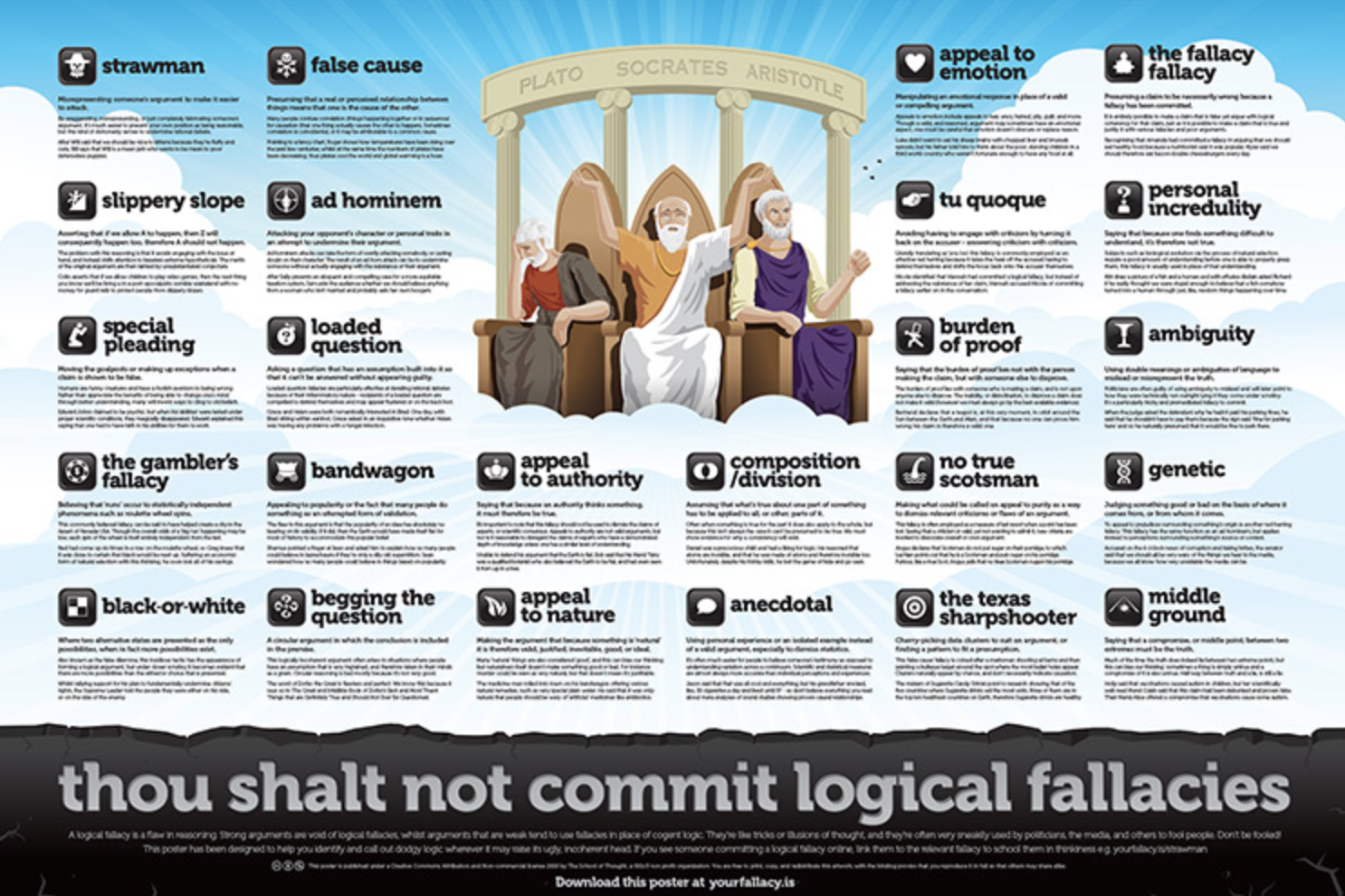
For some rapid-fire examples of logical fallacies, this video by Teach Argument breaks downwards 15 logical fallacies in 3 minutes of candidate Donald Trump'due south commencement presidential campaign spoken communication:
Once again, fallacies are intellectually dishonest because they're saying something that doesn't make sense, as if it makes sense. Some are trickier to spot than others, and then definitely refer to yourfallacyis.com (or you can stay apprised of my upcoming course on practicing spotting them by subscribing to The Snow Report.)
At present let's movement on to the adjacent way debaters cheat. This i, in my opinion, is the slimiest:

The Subtle Art Of Not Giving A F*ck Near The Truth
Intellectually Dishonest Motion #3: Deception
The Subtle Fine art Of Not Giving A F*ck About The Truth
Intellectually Dishonest Move #3: Deception
There'southward more one way to deceive than to outright lie.
The nigh clever (as well as the most ignorant) manner to employ intellectual dishonesty is to be deceptive without looking like you lot're outright lying.
Here are some of the main ways to do it. Each of these examples beneath links to Politifact assay that explains why they're deceptive—whether the deception was intentional or not.
(click any of the quotes to read the full explanations)
Exaggerating: claiming something that'southward almost true… is not true:

Assuming or insinuating facts not in evidence: putting forth one-half-true or untrue facts challenge that "everyone knows," insinuating "of class they did," or bold someone did something because they vest to a group who did it, etc., when there's no clear bear witness:


Cuz of course she did, flash wink… but in that location's no evidence information technology happened after the subpoena


His friends demanded it, simply he didn't speak up publicly so there's no evidence of this demand
Rejecting facts every bit mere stance: refusing to acknowledge facts then that you tin can claim you disagree.
Inflating credentials: claiming that your or someone you're using equally a source of an argument is more accomplished than they are (oftentimes used with an Appeal to Expertise fallacy).
Denying or hiding your conflicts of interest: not acknowledging when you accept motivated reasoning, then people don't dig into your arguments similar they would if they knew.
Citing hearsay: when at that place'south no evidence to support your opinion (or your lie), claim that people are proverb it:
Claiming the jury is nonetheless out on established facts: rather than outright denying the truth, claiming we're not sure is quack (this is the climate change denial tactic #1, and may soon be the tactic corporations use to ignore the risks of runaway AI technology, according to the Global Catastrophic Risk Constitute).
Claiming an event is settled when information technology's not: this is often an attempt to use a bandwagon fallacy:
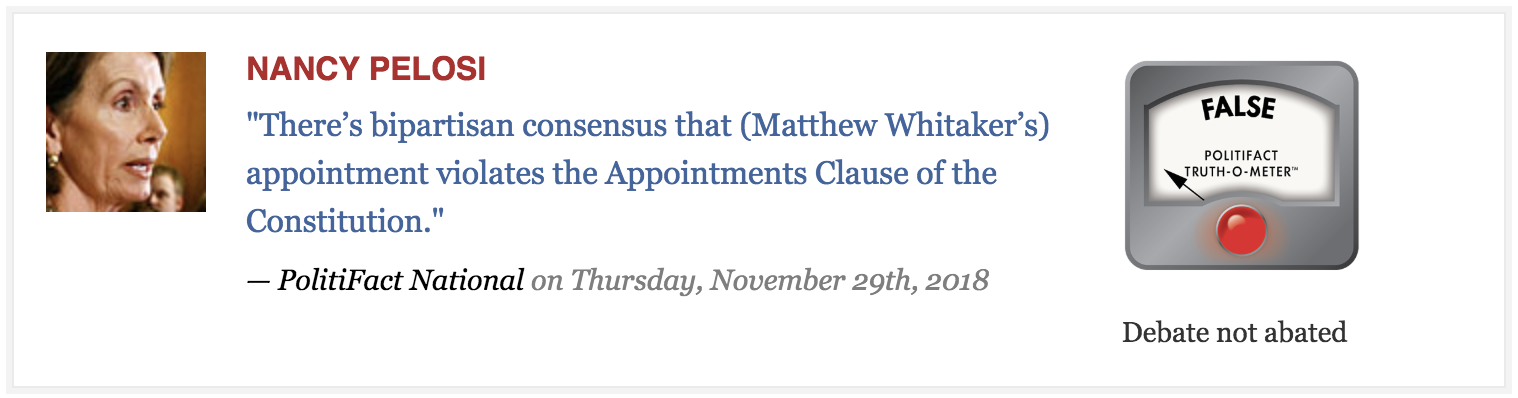
Fudging the definition of words: claiming that well-defined words are ill-divers, redefining words, or otherwise weaseling your way through technicality rather than answering honestly:

"It depends on what your definition of is is."
Beingness vague / weasel words: purposely not being clear so you tin wriggle out of the truth.
Half truths / reddish picking: saying something that's technically true simply leaving out something that would materially modify people'due south understanding of the facts.
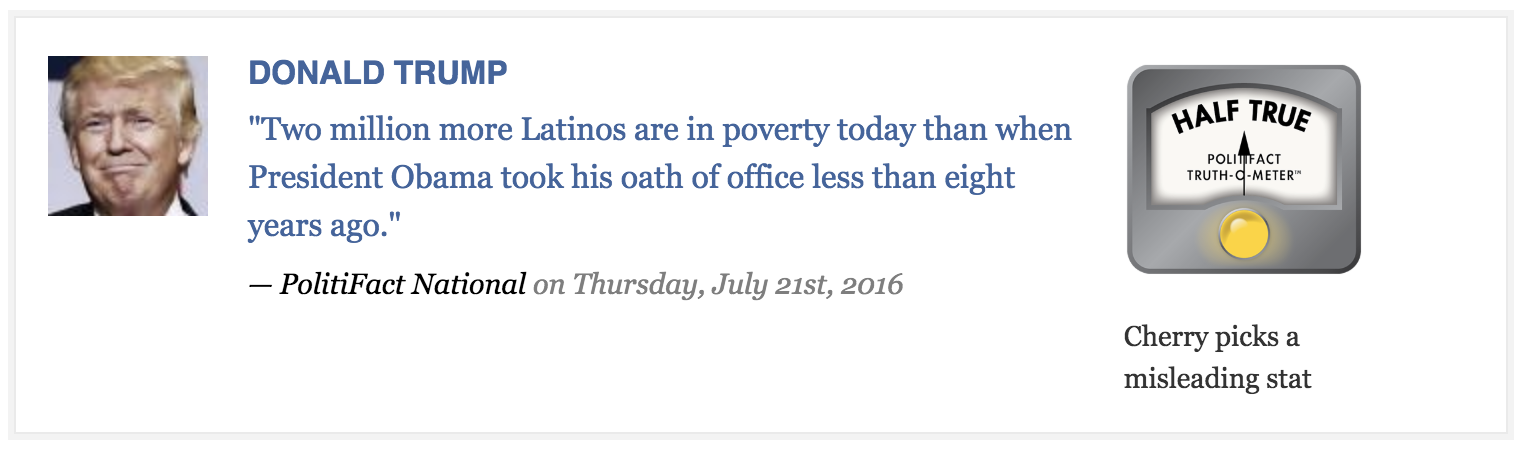
Ignoring net effect: this is a version of half-truth, where yous explain the factual effect something had/will accept, but get out out the other/side effects that are material to the overall effect.
Misinterpreting or skewing information: usually a issue of half-truths or ignoring net result, this is where you use statistics to back up a claim that, upon analysis, is bunk:

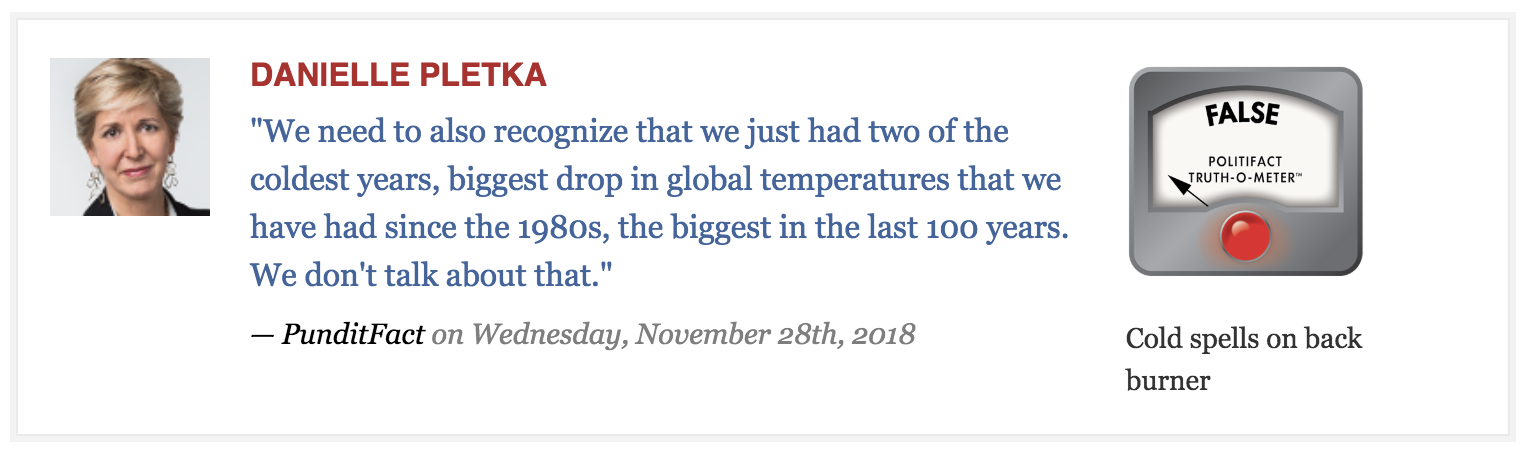
Tiny change that changes everything: pluralizing the singular, converting by tense to present, using a slight misquote that changes the pregnant of something, or repeating sarcasm or joke without indicating it was sarcasm or a joke.
Putting words in people'southward mouths: claiming people said or believe something that they didn't say (common way to prepare a Strawman). This is especially nefarious when it's buried in the middle of a different argument. [Run into the whole Tucker Carlson department above.]
Playing up your conviction or indignation to dismiss the idea that you're outright lying: interim up in lodge to cover upwards the fact that you're lying is a favorite tactic of both politicians and marital cheaters.
Passing the cadet: claiming that someone else did the thing that yous did, or said the thing that yous're proverb, as an alibi to do or say what you're doing, is dishonest:
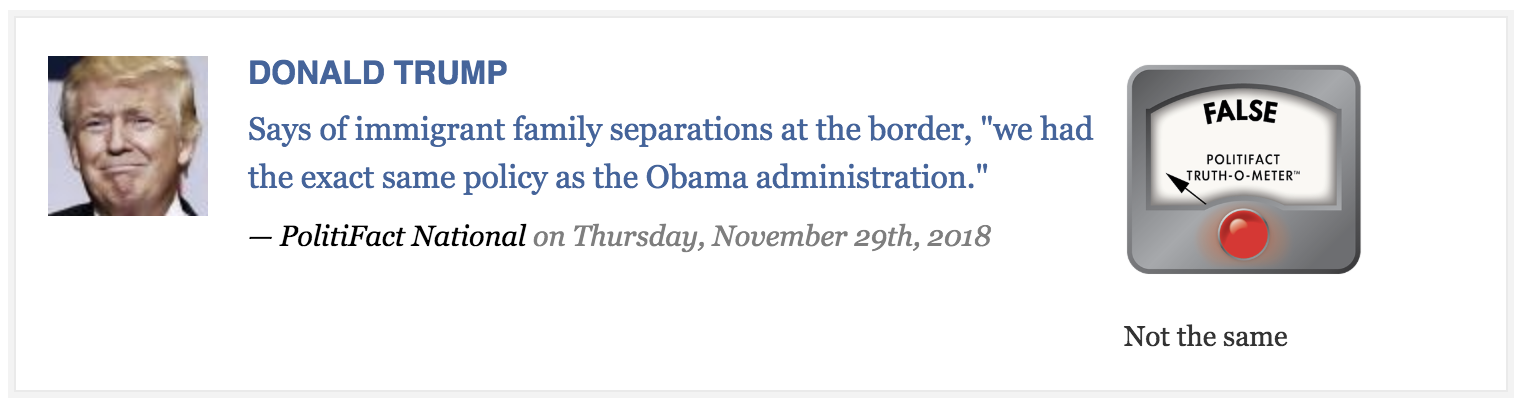
Claiming you lot never said something you said (or wrote): nitpicking an argument against you by lying about what y'all stated earlier is some other common sight in both marital arguments and Trumpian politics:

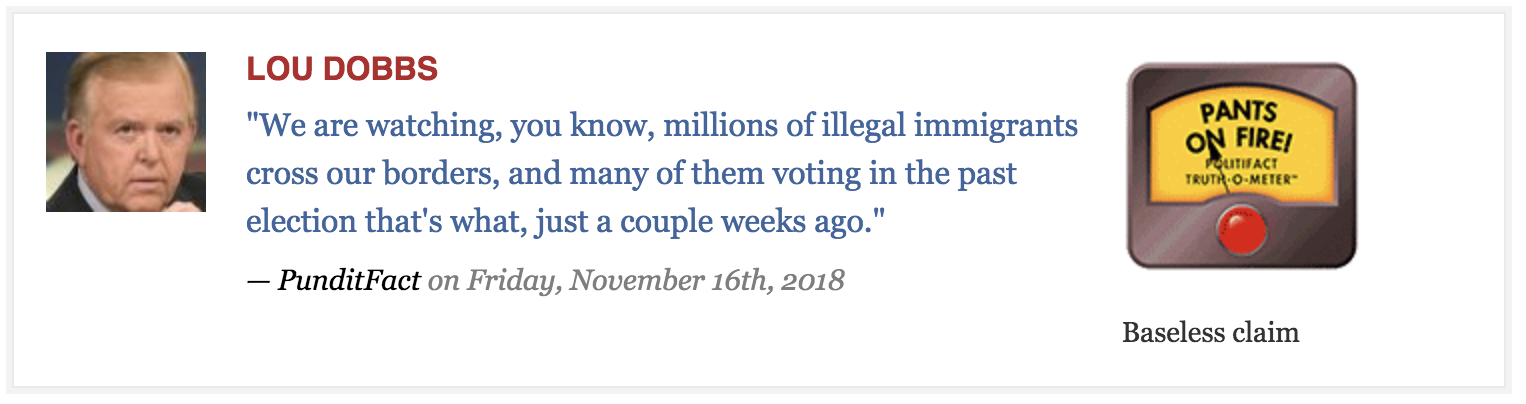
Making shit up: baseless claims are outright lies, but sometimes conspiracy theories are rooted in strange non-sequiturs and don't "feel" like outright lies, so they become in this category. Too-goodhoped-for-true wellness products like "negative ion bracelets" that claim to fight off disease fall into this category. This is the slimiest of all:
And finally, before nosotros get to how to finish all this, there'south 1 more listing of quack tactics to cover.

Dirty Debating
Intellectually Dishonest Motility #4: Poking People In The Eye
Dirty Debating
Intellectually Dishonest Move #4: Poking People In The Middle
Before we start this section: In that location's a small take a chance Tucker Carlson's people meet this and want to pounce on me. I would actually be delighted to speak with Tucker almost this stuff if he has beefiness with my critique of his fence tactics—or even meliorate, to have an honest fence with him about a topic we both care nigh. Given the huge disparity betwixt my profile/platform and Carlson'south, it would be very absurd of him to achieve out and talk. I'll happily amend this postal service based on the chat we have! Come on, Tucker! Allow's do this!
*
TUCKER CARLSON ALMOST NEVER loses an statement.
After CNN canceled its debate show Crossfire, Carlson eventually went on to host one of the nigh-watched news shows on cable, Tucker Carlson This night. On it, Carlson has burnished his reputation of a main debater. He's very proficient at calling out dodgers and deceptive people.
But in the procedure, Carlson too frequently demonstrates intellectual dishonesty himself in the mode he argues.
I phone call it, "dirty debating," or rendering the other person invalid without having to fully and honestly address their true arguments.
This is at best something people do accidentally. But it's frequently deliberate bullying. At worst, information technology betrays a person'southward willingness to practice anything to win an argument—honest inquiry exist damned.
Fascinatingly, Carlson manages to do this under the guise of honest research. And to be fair, he occasionally does manage to be convinced by i of his debate opponents, such as this episode where he "takes on" an advocate for veganism.
Episode after episode of Tucker Carlson Live is described as "Tucker takes on [opponent]." But more often than not he takes them down.
That's not because Carlson is right about everything he thinks—or even that he has conviction in everything he says. (He's open about that.) Information technology's because he's smart plenty to always set up his skirmishes in a way that he can never lose—and so the absolute best his opponents can do is also non lose.
But ordinarily they lose.
Carlson uses a host of dirty tactics to exercise this: nonverbal pageantry (eye rolling, voice raising, mock surprise), deceptive wordplay, name calling, mockery, selective quotations, buried insults, accusations that the other person is using the aforementioned beliefs Carlson uses, offhand insinuations, and trap questions. These tactics strip his debate opponents downwardly and make them wait stupid at best, and like liars if possible. He frequently puts words in other people'south mouths and doesn't give them the chance to defend his mischaracterizations past yelling at them to "Answer THE QUESTION."
After watching hours of debates on his show, Tucker Carlson Live, I put together a flowchart of his debate strategy when he Really wants to have someone down:
Now sometimes Carlson'due south debate opponents are wrong. Frequently they're intellectually quack. He particularly excels at taking down people who've clearly had media grooming for avoiding difficult questions.
But that doesn't alibi his own behavior. And it only masks the fact that a man with his enormous platform (a prime time slot on a big cable aqueduct) and a high IQ could do a lot of good in the earth if he was more intellectually honest.
I would feel bad using 1 person for so many examples of dishonest behavior, but the real-earth consequences of Carlson's rhetoric are pretty stomach-curling. The post-obit video (once again by Carlos Maza) illustrates why Carlson is a favorite pundit of white supremacists. Carlson claims he himself isn't racist, only he feeds racists when he has the talent and resource to do the opposite:
If we want to make our debates productive and take our soapbox help us make progress, we need to kick dirty debating to the curb. Below is a breakdown of some of the most common things to sentinel out for, as illustrated (primarily) on Tucker Carlson Tonight:
Request loaded questions / forcing the other person into a imitation choice fallacy:
When you ask a question that has a built-in assumption that makes it incommunicable to answer without looking bad, yous're not honestly trying to exchange ideas and find truth; you're trying to trap the other person.
Take this clip, for case, where Carlson tries to trap his invitee into quantifying how much of an illegal affair we should practice:
Carlson'southward question is intellectually dishonest considering it leaves no room to debate, say, that we are the ones in charge of what constitutes legal and illegal immigration, and that we should change the police.
A much more productive question than "How many people should nosotros allow in illegally every year?" would be, "How can we change our clearing arrangement so it'due south more than safe, fair, and maximally beneficial?"
Just he'd rather brand his opponent—and by proxy, their political allies—wait similar a fool.
This kind of question is like asking, "What time of day do you plan to kill your husband?" It presumes you desire to, you know, kill him.
Another version of the trap question is where y'all force your opponent into a corner past asking them a multiple choice question and and then supplying the options for them to choose from. E.g.: "Which is it, x or y?"
Name calling / mockery:
This is specially not absurd because it's non simply shitty to call someone names when you have more power than them, but it as well tends to escalate their emotions—which is bad for a logical discussion of bug and ideas. Further, trigger-happy your opponent downward instead of their arguments, and thereby weakening the validity of their arguments in the minds of the audition, often happens while speaking almost something else. Hence the victim then either must veer off topic and accost the insult, or ignore the insult and be potentially diminished in the optics of the audience.
Here's a particularly egregious (and absolutely hilarious) example of Tucker Carlson doing this:
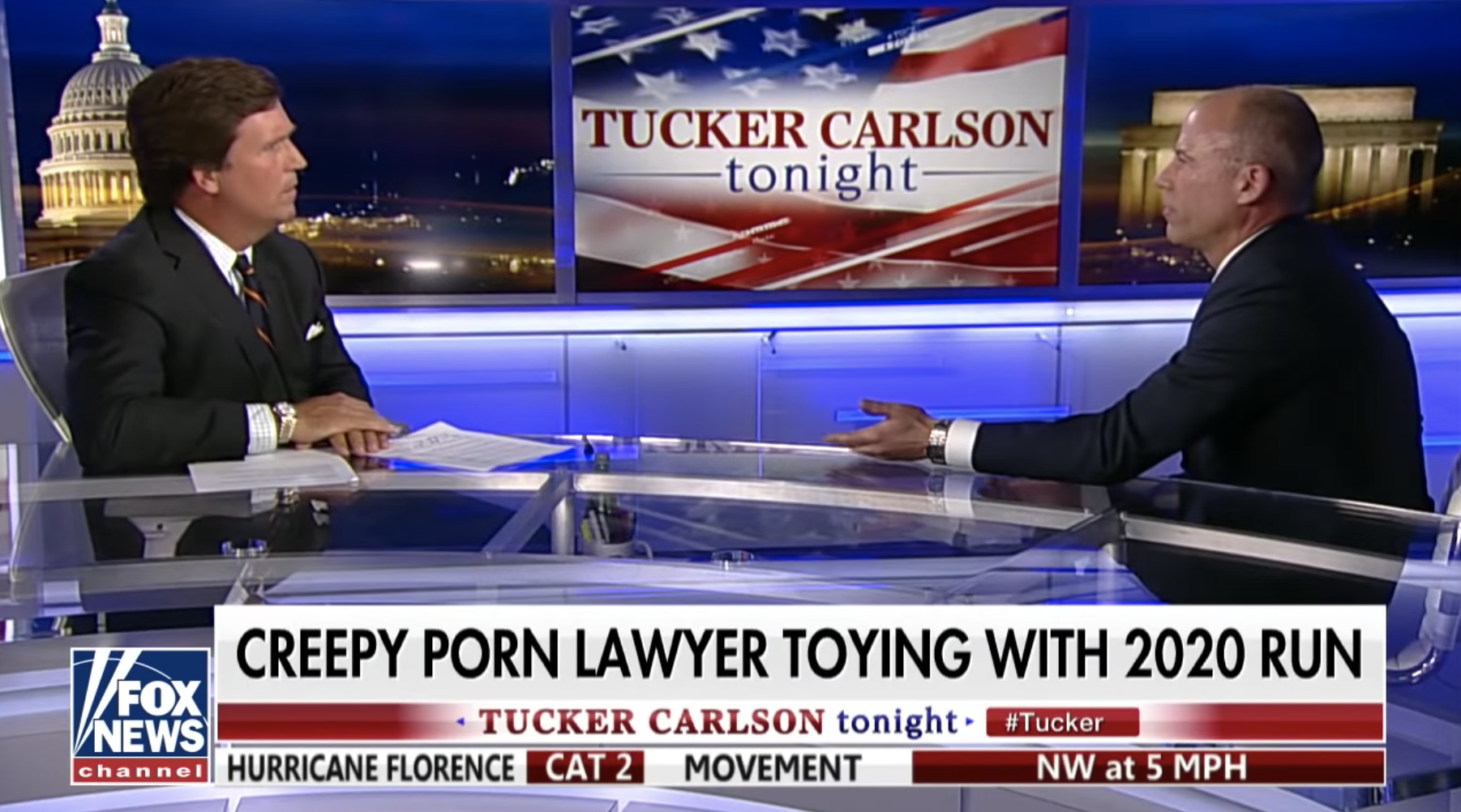
During an interview with lawyer Michael Avenatti, Carlson uses a text overlay to describe his debate opponent as a "creepy porn lawyer." This buried mockery diminishes Avenatti's power in the audience's eyes, and he tin can't do anything most it.
(Notation: Non only is "creepy" an insult, and totally subjective, only it'southward deceptive and reductionist to call Avenatti a "porn lawyer." He is a lawyer with many clients, i of which is a former porn star. It's kind of like introducing Tucker Carlson a "vegan debater" because of that one time he debated a vegan on his bear witness.)
(Notation 2: I wrote this before Michael Avenatti was put in jail on extortion charges. I've been waiting for a reader to email me saying, "Why are you defending a criminal?" Of course, intellectual dishonesty is still dishonesty even if information technology's used confronting a dishonest person. So I'm glad no ane'southward fallen into that trap—or at to the lowest degree, no one who has emailed to berate me has brought it up.)
Accusing the other side, without evidence, of fallacy, bad facts, or some other bad debate tactic:
This is a archetype dodge, only information technology tin can exist employed as an attack besides. Making your debate opponent reply to false accusations again distracts from the topic and is not productive. Tucker Carlson uses this tactic all the time to throw his interviewees off:
After spending a whole interview asking Nye politically charged questions, he so accuses Nye of using "the language of politics" when Nye is not.
So Carlson accuses Nye of "bullying," which is actually the thing that Carlson is doing to Nye.
Carlson and then tears Nye down past telling him that he is not a scientist (Nye is), refuses to mind, and finishes up with the declaration, "I'm open minded, you are not!"
Information technology'due south the same reason this tweet is ironic:
The war against lying, pomposity, smugness, and groupthink continues. Afterward three days off, Tucker Carlson volition be back this evening at 8 p.grand. Eastern, only on @FoxNews. Be certain to melody in. #Tucker
— Tucker Carlson (@TuckerCarlson) Apr 23, 2018
Always acting like you lot're winning even if you're non:
This is intellectually dishonest if it'southward used to manipulate the audience—or if you lot really did not win. On the rare occasion that Carlson is matched by one of his argue guests, he responds by laughing and/or by ending the segment while getting a last give-and-take in that makes it seem like he won.
But the best contempo example of this is when President Trump claimed a "very Big Win" in the 2018 midterm elections when, in fact, his party lost both in popular vote and Congressional seats:
Those that worked with me in this incredible Midterm Election, embracing certain policies and principles, did very well. Those that did not, say adieu! Yesterday was such a very Large Win, and all under the pressure level of a Nasty and Hostile Media!
— Donald J. Trump (@realDonaldTrump) November 7, 2018
Dismissing or prohibiting points of view for superficial reasons:
This is when yous utilise an Ad Hominem or discrimination to invalidate what someone has to say.
In this clip, Tucker Carlson tries to invalidate his guest's political signal of view by reading headlines of manufactures she's written about women's style, implying that she'due south impaired considering she writes for Teen Vogue:
Anything that shuts out valid points of view is harmful, but it's especially grimy when justified this fashion.
The total 10-minutes of the in a higher place Tucker Carlson interview with Lauren Duca is actually a good instance of the last 3 dirty debating tactics in our list. I'll embed it after the descriptions of each of them if you'd like to watch it all:
Burying arguments or criticism in arguments nigh other things:
This i'due south like in ways to The Trumpstorm contrivance. When you slip in criticism while talking well-nigh something else, you lot make the opponent have to choose whether to answer to the topic at hand, or to respond to the cached criticism. This intellectually dishonest tactic can hands derail a debate from the topic at hand.
Intimidating / interrupting / badgering:
It should go without saying, but shutting down your opponent with assailment rather than letting your arguments speak for themselves is both intellectually dishonest and shitty.
dismissive theatrical behavior:
Using your voice or body language (eye rolls, using a childlike vocalisation, mocking laughter, etc.) to make your opponent look bad and you look proficient, rather than letting your logic and arguments stand up on their own, is a manipulative and dishonest tactic:
Ok, that's a lot of heinous stuff to go on track of. Unfortunately, recognizing intellectual dishonesty is only the skirmish. The boxing starts when we endeavour to finish it.

How To Get A Dishonest Discussion Dorsum On Rail
A few scripts for curbing intellectual dishonesty and distraction
How To Get A Dishonest Word Back On Track
A few scripts for curbing intellectual dishonesty and distraction
IN THE Recent 2018 debate for the Governorship of Florida, the debate host asked candidate Ron DeSantis a straightforward question: Did he think President Trump was a adept role model for kids?
DeSantis spent the full minute he was allotted to answer talking nigh how he liked to play with his kids, Trump'due south proposed wall to Mexico, and the US embassy in State of israel—a classic Trumpstorm dodge where he didn't answer the question at all.
His opponent, Andrew Gillum, who ultimately lost the election, adeptly pointed out the intellectual dishonesty in DeSantis's response by but request the moderator to repeat the question.
"I'm dislocated by the question. How did we get to State of israel?"
The moderator then repeated the question, and the audience laughed when they realized that DeSantis had dodged information technology:
In many debates, a dodge like DeSantis's would go overlooked. The moderator didn't stop him from existence intellectually quack, and so his opponent did. Ideally, in a setting with a moderator, he wouldn't take to.
And that's perhaps the most actionable indicate of this entire post: The moderators of debates—and in the example of politics, that means journalists—have a responsibleness to put honesty and the audition first. And that's really non happening very much these days.
The only person in a football game who tin can finish bad behavior is the referee. Doesn't affair if the players similar him or hate him, the referee keeps the game fair.
But this isn't what happens in contend on Telly.
The commencement, second, and third rule of curbing intellectual dishonesty is what Gillum had to exercise on his own because his contend moderator didn't: calling it out.
To do that, though, yous first have to go the person to terminate. And ideally, if the goal of the argue is to truly substitution ideas, we should let the person who but did wrong endeavour over again if they would like. After all, it'southward a fallacy to discredit an idea just because the person making an argument for it argued badly.
Many people won't respond well to being called out—and often won't just stop to let yous do information technology—so curbing bad fence beliefs takes a bit of finesse. Gillum'south call-out to a higher place is a good example.
In other words, though in practice stopping intellectual dishonesty is not piece of cake, the formula for doing so is straightforward:
-
Stop them.
-
Identify what's happening.
-
Rewind and endeavour again.
Ideally, nosotros can exercise this without escalating emotions or using any muddied behavior of our own. In other words, existence kind while being firm.
This is much easier for a debate moderator to practice than for a participant. But here's how to exercise information technology in any instance.
Halting Fallacies:
Some debaters are more than aware of the fallacies they use than others (and shame on those who practise). In either example, stopping a beguiling argument can exist accomplished with minimal ego-bruising. Doing so just requires whoever calls out the fallacy to practice and so with kindness and respect.
Here's the script I recommend for argue moderators who spot a fallacy:
-
(Stop them.) "Let me stop you for a second."
-
(Gently point out the fallacy.) "There's a logical fallacy in what you just said: Appeal to Authorization. Only because an dominance figure said something, doesn't mean it'south true."
-
(Rewind.) "Practise y'all wish to restate your statement some other manner?"
Moderators have more authority and tin be more direct in their calling out of bad behavior than a participant, who may come off big-headed if they come in strong similar a referee. For that reason, I recommend a gentler script if yous're in a contend with no moderator.
Here's the script I recommend for when yous spot a fallacy in a non-chastened fence:
-
(Stop them.) "Allow me terminate you for a second."
-
(Gently point out the fallacy. E.g:) "I'chiliad genuinely interested in understanding your point of view. But just considering an authority blazon figure said something, doesn't mean it's truthful."
-
(Rewind.) "Is at that place another manner you can back this viewpoint upwardly and so that I understand?"
Even if the person you're saying this to is being argumentative, you being reasonable and kind—simply house—like this tin assist you cut through bullshit without making the other person lose too much face.
Deterring Dodgers:
Unfortunately, a lot of good dodgers are hard to get to stop talking. This is why I call back an platonic setup for a debate involves rules that debaters are not immune to talk over the host, plus an actual physical style to stop a debater that goes off the rails. And past that I mean turn off their microphone or put a giant end sign in their face.
For both moderators and participants, I recommend the following script when someone dodges a question:
-
(Stop them.) "Let me stop you right there."
-
(Acknowledge them.) "I hear what you're saying."
-
(Rewind them.) "I'd similar to hear your answer to the question, [echo the question]?"
If they proceed to dodge again, I recommend a more firm script:
-
(Finish them.) "Let me terminate you once again."
-
(Point out what they're doing.) "You lot're not answering the question."
-
(Firmly rewind them.) "Let's rewind and accost the question."
At this bespeak, a defended dodger may employ a dissimilar dodging tactic, raise their voice, or resort to a logical fallacy or charade. Information technology's important not to permit them off the hook if you want the fence to be productive.
Watch in this memorable clip from the 2016 Presidential debates as Anderson Cooper refuses to let Donald Trump off the hook when he repeatedly tries to dodge:
I matter that a good debate host will not exercise to stop a dodger, however, is force the debater to give an answer from a limited set of choices, if there are culling answers.
Forcing someone to say "aye" or "no" is a tempting tactic, merely it's not fair if a valid answer could be more complicated than that. In the case of the higher up clip, either Trump did or didn't commit the sexual assaults he bragged about to Billy Bush—at that place's no culling—and then it was fair to inquire him for a "yep" or a "no" in this instance.
Curbing Deception:
Often deceivers won't acknowledge that they're lying, and then you take to do some extra work to work around them. This is where I recommend non rushing debates, and then you can take the time to verify facts. Having a fence over correspondence—similar they did in the olden days—is a great way to attain this.
In a existent-time debate, I recommend having a panel of judges who can fact-cheque and telephone call out deception. E.thou.:
-
(Stop them with a whistle, buzzer, etc., and plough off their microphone.)
-
(Place the charade.) "Nosotros've stopped you because yous but made a deceptive statement. You lot said [x]. Withal, that is [explicate the charade]."
-
(Clarify the real fact and its source.) "The accurate fact, co-ordinate to [source], is [y]."
-
(Give them the chance to explain themselves or recover.) "In lite of the facts, would you like to re-wind and continue explaining your viewpoint?"
It's harder to police deceptive statements in an informal fence setting. For that, I recommend using a script similar this:
-
(Stop them.) "Permit me cease you correct there for a 2nd."
-
(Identify the deception.) "You merely said [x]. Yet, I believe that's inaccurate."
-
(Clarify the real fact and its source.) "The truth, according to [source], is [state it accurately]."
-
(Give them the run a risk to explain themselves or recover.) "Can we rewind to where we left off?"
It'southward really hard to pull this off without seeming like a jerk. And it'due south likewise hard to accept being chosen out like this without your ego smarting a little bit.
And then if the person allows you to go through this script without jumping in, good on them.
Merely people will sometimes answer by attacking the facts or their source, using another charade similar claiming that the facts are but an opinion—or resorting to dodging, etc.
In some cases, they'll combat being called out with an outright lie.
This is where I recollect the role of a good contend referee is especially important. At the end of a circular of argue, the moderator should sum things upward, and then the audience is crystal clear on what the facts are.
That'south what journalists are supposed to do. And I think if journalists took that role upon themselves over again when it comes to public discourse—with real rules that make them more than like referees than players—the profession itself would become some of its old credibility and power back.
New Rules For intellectually honest Fence
Let's gear up a higher standard and concrete guidelines for productive debates—in politics and elsewhere
New Rules For intellectually honest Debate
Let's prepare a college standard and concrete guidelines for productive debates—in politics and elsewhere
The style nosotros set up political debates on Telly—and the way they naturally unfold IRL—leads to high potential for intellectual dishonesty. And unfortunately, the rules of presidential debates really go far difficult for united states of america to adjourn a lot of it.
In the 2012 debates, Romney's and Obama's teams negotiated so that at that place would exist no follow up questions when the candidates gave their first answer. That is not a recipe for getting at the truth. And the 2016 debate rules were kept secret from the public. (What we do know is that in those debates, candidate Donald Trump tried to get it so the moderators were non allowed to fact check when candidates lied about things.)
Simply the networks that air the debates have the power to set up rules. Which ways they tin can decide to hold politicians answerable for intellectual honesty if they desire.
In other words, journalists could take it upon themselves to police intellectual honesty. To do so, though, nosotros need everyone to sympathise the rules of proper soapbox just like we understand the rules for a game of football game.
In this contempo post, I suggested guidelines for productive fence for teams that are working on solving bug together. In a alive political argue, I'd suggest an even more than formal set of rules.
Then political debates could be run like whatsoever other sporting issue. Nosotros could fifty-fifty accept a organisation of points and deductions for bad beliefs, and referees who keep players accountable for intellectual honesty.
For example, formal debates could accept the following rules:
Dominion #one: Debaters must address the topic at hand. If a debater veers off topic, they will be stopped past the referee.
Rule #2: Debaters may non use logical fallacies and will exist called out for them in real fourth dimension by a panel of judges.
Rule #3: Debaters must operate from a common set of facts, and may not be deceptive. A panel of judges volition check all assertions of fact; and false, exaggerated, and deceptive statements volition exist called out and corrected.
Rule #4: Debaters must play nice. The referee will plough off the microphone and/or place a cease sign in front of a debater's face if they interrupt, hash out their time, or appoint in any other bad sportsmanship.
Rule #5: The contend on an event/question ends when the the positions of the debaters are clear. If needed, the argue will go on another time.
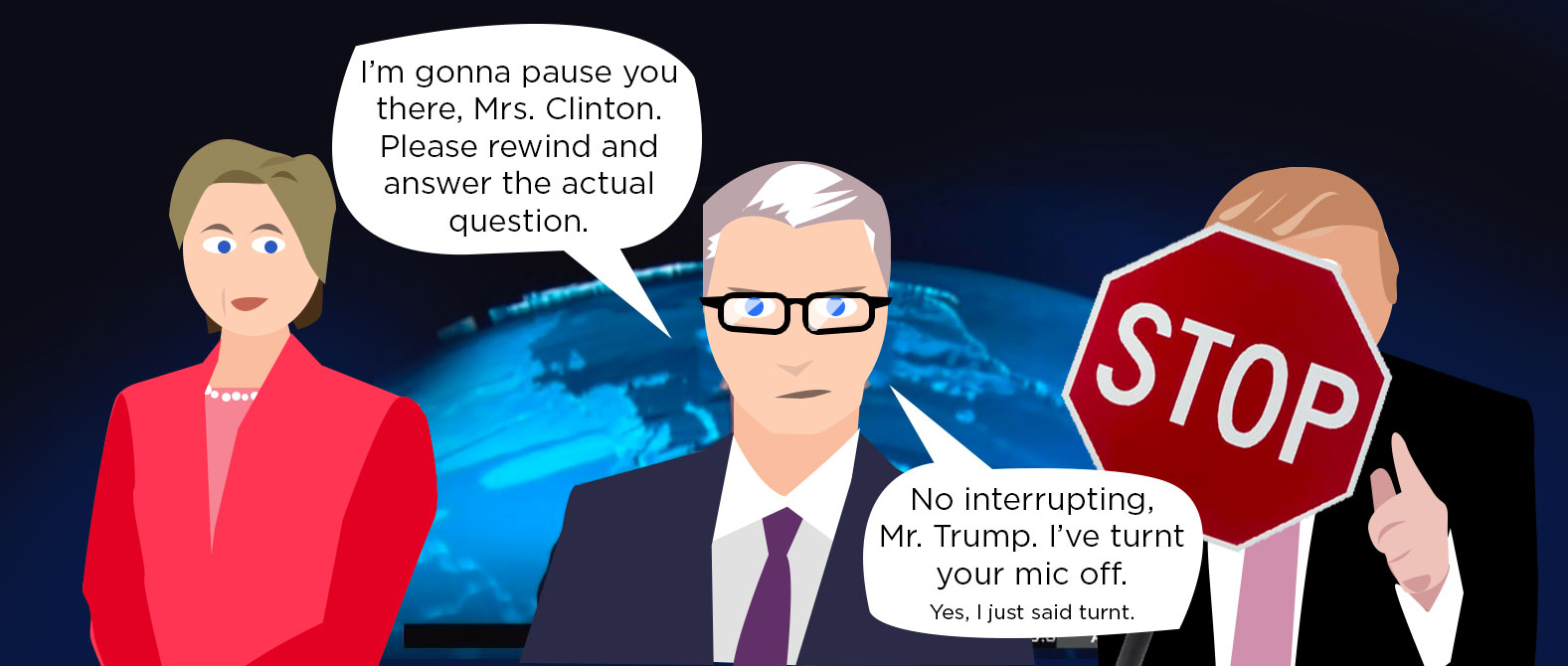
Imagine if, every fourth dimension a politician or pundit was intellectually dishonest, he or she was stopped by a referee or judging panel (with their microphone turned off), and then go a chance to readdress or re-argue their viewpoint. Imagine how that would forcefulness debaters to clarify their ideas, acquit more honestly. Imagine how it could help filter bad politicians out of the game.
The winner in this kind of debate wouldn't be the candidates; information technology would be the audition.
*
IN THE Side by side ROUND of election debates, if the Democrats embraced rules like the in a higher place in their primaries and showed how a system that encourages college standards of intellectual honesty worked, they could pressure level the networks—and President Trump—into accepting the new rules and get everyone to engage in more honest debates.
Similarly, if Republicans and Independents and cable news panels started insisting on debates with these kinds of standards, they could pressure Democrats into honest debates every bit well.
This could change everything.
But even if nobody ends up existence willing to alter the rules of politics, the residue of u.s.a. ought to commit to making intellectual honesty a priority.
That'due south how we're going to get improve together—equally voters, as workers, as family members, and every bit members of the human being family.
Shane Snow is a journalist and writer of Dream Teams . He writes nearly science and business and speaks globally about amend ways of working together.
Source: https://www.shanesnow.com/articles/intellectual-dishonesty
0 Response to "You Know Youre Winning an Arguement When People Change the Subject"
Post a Comment